Montessori tips can transform how children learn and grow at home. This educational approach, developed over a century ago by Dr. Maria Montessori, focuses on self-directed activity, hands-on learning, and collaborative play. Parents don’t need to enroll their children in an expensive Montessori school to apply these principles. Simple changes to daily routines and home environments can foster independence, curiosity, and a genuine love of learning. This guide covers practical Montessori tips that any family can carry out, from setting up child-friendly spaces to choosing the right materials for each developmental stage.
Table of Contents
ToggleKey Takeaways
- Montessori tips emphasize child-led learning, where adults act as guides rather than directors.
- Create a prepared environment with low shelves, child-sized furniture, and limited toy rotation to foster independence.
- Involve children in daily activities like cooking, cleaning, and self-care to build confidence and coordination.
- Choose purposeful materials made from natural substances like wood—household items often work as well as expensive Montessori products.
- Observe your child’s interests and adjust activities to match their developmental needs and curiosities.
- Trust the process: children thrive when given freedom within limits and space to learn at their own pace.
Understanding the Montessori Philosophy
The Montessori philosophy treats children as capable individuals who learn best through exploration. Dr. Maria Montessori observed that children naturally gravitate toward activities that match their developmental needs. She called these periods “sensitive periods”, windows when a child shows intense interest in specific skills like language, movement, or order.
Three core principles guide Montessori education:
- Respect for the child: Adults act as guides, not directors. They observe rather than instruct, stepping in only when needed.
- The prepared environment: Spaces are designed so children can access materials independently and make their own choices.
- Intrinsic motivation: Children work because they find the activity meaningful, not for external rewards like stickers or praise.
These Montessori tips stem from a simple belief: children thrive when given freedom within limits. They need boundaries, but they also need space to make mistakes, solve problems, and discover their interests. Parents who understand this philosophy can apply it at home without special training or certifications.
Creating a Montessori-Friendly Environment at Home
A Montessori-friendly home puts children in control of their surroundings. This doesn’t require a complete renovation. Small adjustments make a big difference.
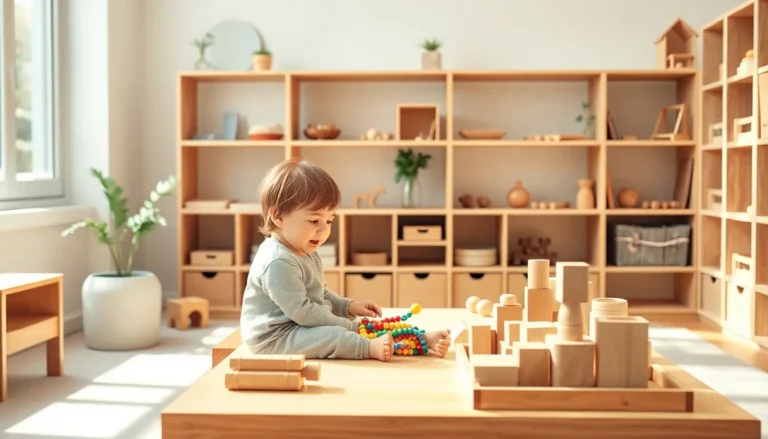
Start with furniture and storage. Low shelves allow children to see and reach their toys without asking for help. A child-sized table and chair encourage independent play and art projects. Hooks placed at a child’s height let them hang their own coats and bags.
Organize materials intentionally. Montessori tips for home organization include:
- Display a limited number of toys or activities at once. Rotate them every few weeks to maintain interest.
- Use baskets or trays to group related items. A puzzle stays in its tray. Art supplies stay together in a basket.
- Place everyday items within reach. Keep snacks on a low pantry shelf. Put cups near the sink so children can get their own water.
Each room can reflect these principles. In the kitchen, a learning tower lets toddlers participate in cooking. In the bathroom, a step stool and mirror help with toothbrushing and handwashing. The goal is consistent: reduce barriers so children can do things themselves.
Clutter works against this philosophy. A calm, orderly space helps children focus. When everything has a place, cleanup becomes part of the routine rather than a battle.
Encouraging Independence in Daily Activities
Independence sits at the heart of Montessori education. Children want to do things themselves, “Me do it.” isn’t just a toddler phase. It’s a developmental drive.
Practical Montessori tips for building independence focus on daily routines:
Self-care: Teach children to dress themselves by choosing clothes with simple fastenings. Lay out two outfit options the night before. Let them practice buttoning, zipping, and tying at their own pace.
Meal preparation: Even two-year-olds can help in the kitchen. They can wash vegetables, stir batter, and pour ingredients. Older children can slice soft foods with a child-safe knife. These tasks build coordination and confidence.
Cleaning and chores: Small brooms, dustpans, and spray bottles sized for little hands turn cleanup into play. Children enjoy sweeping up messes they’ve made. They take pride in wiping tables after meals.
Morning and bedtime routines: Visual schedules help children move through steps without constant reminders. Pictures of each task, brush teeth, put on pajamas, read a book, give them control over their time.
The key is patience. Tasks take longer when children do them. Resist the urge to take over. A crooked bedspread or imperfectly folded laundry still counts as success. These Montessori tips work because they prioritize process over perfection.
Choosing Age-Appropriate Montessori Materials
Montessori materials look different from typical toys. They’re designed with purpose, each one isolates a specific skill or concept.
For infants and young toddlers, focus on sensory exploration:
- Object permanence boxes
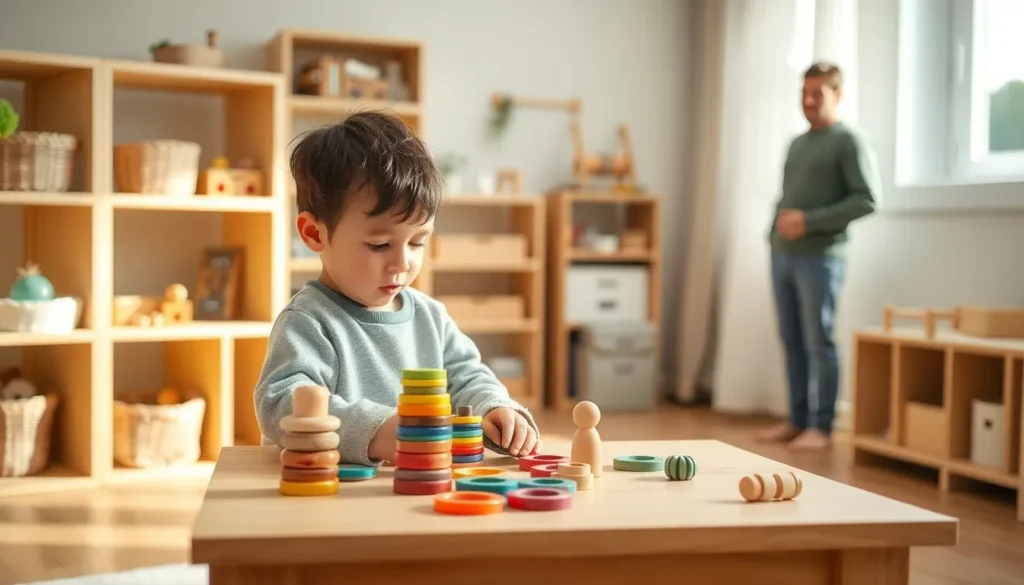
- Stacking rings and nesting cups
- Simple puzzles with knobs
- Wooden rattles and grasping toys
For toddlers and preschoolers, Montessori tips suggest introducing practical life activities alongside sensory materials:
- Pouring activities (dry rice, then water)
- Threading beads
- Sorting objects by color, size, or shape
- Simple food preparation tools
For children ages four and up, academic materials become appropriate:
- Sandpaper letters for pre-reading
- Number rods and counting beads
- Geography puzzles
- Beginning science experiments
Parents don’t need to buy expensive official Montessori materials. Household items often work just as well. A muffin tin and pom-poms become a sorting activity. Measuring cups teach volume. Real kitchen tools, child-sized but functional, beat plastic play versions.
Quality matters more than quantity. Choose materials made from natural materials like wood, metal, and fabric. These offer richer sensory feedback than plastic. They also tend to last longer.
Rotate materials based on your child’s interests. When something sits untouched for weeks, put it away. When your child shows fascination with a new skill, find materials that support it.
Observing and Following Your Child’s Interests
Observation is a parent’s most powerful Montessori tool. Dr. Montessori spent countless hours watching children before designing her methods. Parents can do the same at home.
Set aside time to watch without interrupting. Notice what your child gravitates toward. Do they spend ages lining up toys? They might be in a sensitive period for order. Do they ask endless questions about bugs? Follow that curiosity with books, outdoor exploration, and magnifying glasses.
These Montessori tips for observation help:
- Watch from a distance when possible. Children behave differently when they know they’re being observed.
- Take mental or written notes about repeated behaviors and interests.
- Notice frustration patterns. They often signal a skill your child is ready to develop.
- Pay attention to what captures their attention for long periods.
Following your child’s lead doesn’t mean abandoning structure. It means adjusting activities and materials to match genuine interests. A child fascinated by vehicles might practice counting with toy cars instead of blocks. A child who loves music could learn letters through songs.
This approach requires flexibility. Plans change when children show unexpected interests. That’s okay. Montessori tips work best when adults respond to the child in front of them rather than following a rigid curriculum.
Trust the process. Children know what they need to learn. Adults provide the environment and opportunities. The child does the rest.