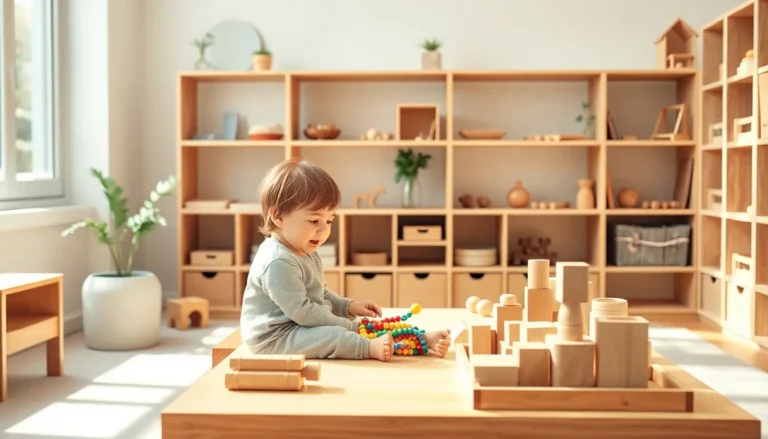

Montessori strategies offer a proven framework for raising curious, capable children. These methods focus on the child’s natural desire to learn rather than forcing information through rigid instruction. Dr. Maria Montessori developed these approaches over a century ago, and they remain effective today because they respect how children actually think and grow.
Parents and educators often struggle with traditional teaching methods that prioritize memorization over understanding. Montessori strategies flip this script. They place children at the center of their own education, giving them freedom within clear boundaries. The result? Kids who solve problems independently, stay engaged longer, and develop genuine love for learning.
This guide breaks down the core Montessori strategies that work, whether in a classroom or at home.
Table of Contents
ToggleKey Takeaways
- Montessori strategies center on respecting children as capable individuals who learn best through self-directed exploration within clear boundaries.
- Creating a prepared environment with child-sized furniture, minimal clutter, and natural materials encourages independence and focus.
- The three-period lesson technique (naming, identifying, recalling) offers a simple framework for teaching any concept effectively.
- Hands-on learning and sensory materials help children grasp abstract concepts by starting with concrete, physical experiences.
- Parents can apply Montessori strategies at home by slowing down, offering limited choices, and including children in daily tasks like cooking and cleaning.
- Allowing children to struggle builds problem-solving skills—step in only when frustration becomes unproductive.
Core Principles Behind Montessori Strategies
Several key principles form the foundation of Montessori strategies. Understanding these helps parents and teachers apply them correctly.
Respect for the Child
Montessori strategies treat children as capable individuals. Adults guide rather than control. This means listening to children’s interests and letting them make age-appropriate choices. A three-year-old can choose between two snack options. A seven-year-old can decide which subject to study first.
Sensitive Periods
Children go through windows of time when they absorb specific skills easily. Between ages two and four, language acquisition peaks. From birth to age six, sensory development takes priority. Montessori strategies align activities with these sensitive periods for maximum impact.
The Absorbent Mind
Young children soak up information from their environment without conscious effort. This concept shapes how Montessori strategies structure learning spaces and experiences. Everything in a child’s environment teaches something, so every detail matters.
Mixed-Age Groups
Traditional classrooms separate children by birth year. Montessori strategies group children across three-year age spans. Younger children learn from older peers. Older children reinforce their knowledge by teaching. Everyone benefits.
Prepared Environment and Organized Spaces
The prepared environment stands as one of the most practical Montessori strategies. It refers to intentionally designed spaces that invite exploration and support independence.
Child-Sized Everything
Furniture, shelves, and tools match children’s proportions. When a child can reach materials without adult help, they practice independence dozens of times daily. Low shelves, small tables, and accessible coat hooks make this possible.
Order and Simplicity
Clutter overwhelms young minds. Montessori strategies call for minimal, organized materials. Each item has a designated spot. Children learn to return things where they found them, a skill that transfers to life beyond the classroom.
Beauty and Natural Materials
Plastic toys fade into the background. Wood, metal, glass, and fabric engage children’s senses more deeply. Plants, natural light, and soft colors create calm spaces where focus comes naturally.
Rotating Materials
Rather than overwhelming children with options, Montessori strategies suggest rotating activities. Keep eight to ten materials accessible at once. Swap them weekly or monthly based on the child’s current interests and developmental stage.
Encouraging Independence and Self-Directed Learning
Independence sits at the heart of Montessori strategies. The goal isn’t creating children who need constant supervision, it’s raising humans who trust themselves.
The Three-Period Lesson
This teaching technique introduces concepts in three stages. First, the adult names the object or concept (“This is red”). Second, the child identifies it when asked (“Show me red”). Third, the child recalls the name independently (“What color is this?”). Simple, effective, and easily adapted for any subject.
Following the Child
Montessori strategies require adults to observe before intervening. What captures this child’s attention? What frustrates them? Observation reveals readiness. A child stacking blocks might be ready for early math concepts. A child fascinated by letters might be entering a reading sensitive period.
Freedom Within Limits
This principle confuses some parents. Montessori strategies don’t mean letting children do anything they want. Children choose freely among appropriate options. They can’t hit others, but they can decide whether to paint or build. Clear boundaries create security: choices within those boundaries build confidence.
Allowing Struggle
When a child struggles with a zipper, the instinct to help kicks in fast. Montessori strategies encourage patience. Struggle builds problem-solving skills. Step in only when frustration becomes unproductive, and then offer the minimum help needed.
Hands-On Learning and Sensory Exploration
Abstract concepts confuse young children. Montessori strategies make learning concrete through hands-on materials and sensory experiences.
Sensorial Materials
Montessori classrooms use specific tools to isolate sensory qualities. Pink Tower blocks teach size gradation. Sound cylinders develop auditory discrimination. These materials give children physical reference points for abstract ideas.
Practical Life Activities
Pouring water, folding clothes, slicing bananas, these aren’t chores in Montessori strategies. They’re curriculum. Practical life activities develop fine motor skills, concentration, and sequencing abilities. They also build genuine competence.
Movement and Learning
Sitting still works against how children learn. Montessori strategies incorporate movement into nearly every activity. Children carry trays across rooms. They walk on lines to develop balance. Learning happens through the body, not even though it.
Concrete to Abstract
Montessori strategies introduce math through physical objects before symbols. Children count beads, group quantities, and manipulate number rods. Only after building concrete understanding do they transition to written numerals and equations. This sequence prevents the confusion that plagues traditional math instruction.
Applying Montessori Strategies at Home
Parents don’t need a Montessori classroom to use these strategies. Small changes create big differences.
Start with the Environment
Create one child-accessible area. A low shelf with a few activities works well. Keep items organized and rotate them regularly. This single change invites independent play immediately.
Slow Down
Montessori strategies require patience. Let children dress themselves even when it takes ten minutes. Allow them to pour their own juice even though spills. These moments build skills that rushing destroys.
Offer Limited Choices
“What do you want for breakfast?” overwhelms children. “Would you like eggs or oatmeal?” empowers them. Two or three options give children control without decision paralysis.
Include Children in Daily Tasks
Cooking, cleaning, and gardening become learning opportunities. A two-year-old can wash vegetables. A four-year-old can set the table. Montessori strategies see these moments as valuable, not interruptions to real learning.
Observe Before Correcting
Watch what your child does before jumping in. Their approach might work. Their “mistake” might teach them something. Montessori strategies prioritize the learning process over the perfect outcome.