Finding the best Montessori school for your child can feel overwhelming. With hundreds of programs claiming the Montessori name, how do you separate the authentic from the mediocre? This guide breaks down exactly what to look for, what questions to ask, and how to identify a program that will truly support your child’s development.
Montessori education has grown significantly in recent years. The National Center for Montessori in the Public Sector reports over 5,000 Montessori schools now operate in the United States alone. That growth means more options, but also more variation in quality. Parents need clear criteria to make informed decisions.
Table of Contents
ToggleKey Takeaways
- The best Montessori schools feature mixed-age classrooms, child-led learning, and uninterrupted work periods of 2–3 hours.
- Look for teachers certified by AMI or AMS, as they complete 1,200+ hours of specialized Montessori training.
- Authentic Montessori classrooms use specific hands-on materials like the pink tower and golden beads—not random toys.
- When evaluating the best Montessori programs, schedule classroom observations and ask about teacher credentials, work period length, and accreditation.
- Montessori education spans infancy through high school, with each level offering distinct materials and learning approaches.
- Trust your observations during visits—engaged children, respectful teachers, and a calm environment are strong indicators of quality.
What Makes a Montessori School Stand Out
The best Montessori schools share specific characteristics that set them apart from traditional education models. Dr. Maria Montessori developed her method over a century ago, but its core principles remain remarkably relevant.
First, authentic Montessori classrooms use mixed-age groupings. Children typically span three years in age within a single classroom. A 3-year-old learns alongside 4- and 5-year-olds. This structure allows younger children to observe and learn from older peers while older children reinforce their knowledge by teaching concepts they’ve mastered.
Second, the best Montessori programs emphasize child-led learning. Teachers (called “guides” in Montessori terminology) observe each child and present lessons based on individual readiness. They don’t lecture to the whole class simultaneously. Instead, they work with small groups or individual children throughout the day.
Third, quality Montessori schools maintain uninterrupted work periods. Children need at least two to three hours of continuous time to choose activities, engage deeply, and complete work cycles. Frequent interruptions undermine the concentration Montessori education aims to develop.
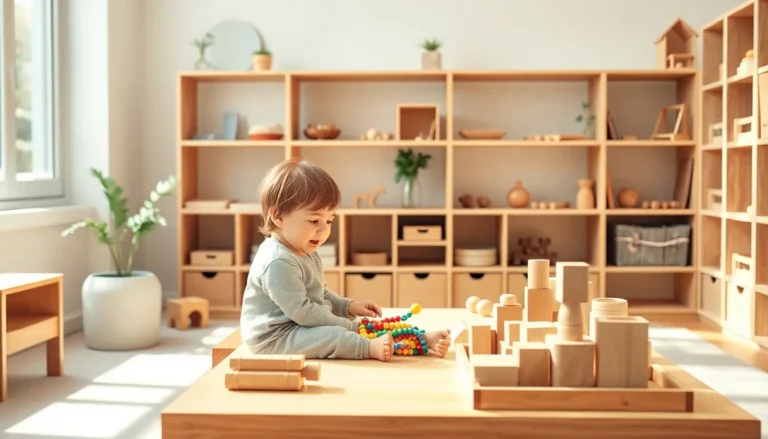
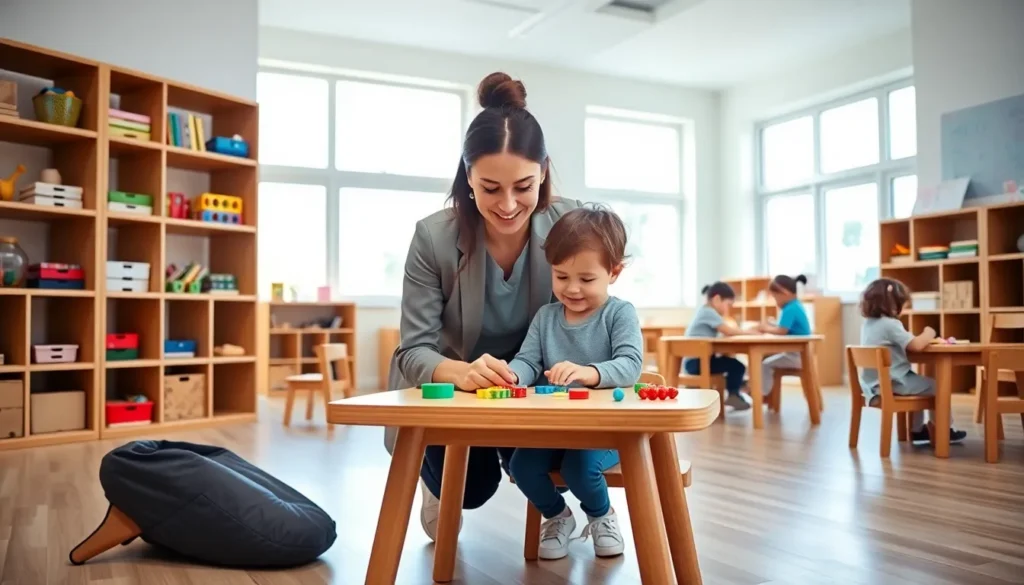
The physical environment matters too. Authentic Montessori classrooms feature child-sized furniture, open shelving with accessible materials, and a sense of order. Everything has a designated place. This organization helps children develop independence and self-regulation.
Key Features to Look for in a Quality Montessori Program
Not every school using the Montessori name delivers genuine Montessori education. The term isn’t trademarked, so anyone can use it. Parents should look for specific features that indicate quality.
Trained Teachers
The best Montessori schools employ teachers with credentials from recognized training centers. Look for certifications from the Association Montessori Internationale (AMI) or the American Montessori Society (AMS). These programs require extensive coursework and supervised practice. A teacher with weekend certification doesn’t compare to one with 1,200+ hours of specialized training.
Authentic Materials
Montessori classrooms use specific hands-on materials designed by Dr. Montessori herself. The pink tower, the golden beads, the moveable alphabet, these aren’t random toys. Each material teaches specific concepts in a sequential order. Quality Montessori schools invest in complete sets of these materials and maintain them properly.
Accreditation
Schools accredited by AMI, AMS, or the Montessori Accreditation Council for Teacher Education (MACTE) have undergone external evaluation. Accreditation doesn’t guarantee perfection, but it indicates a commitment to authentic Montessori practice.
Low Student-to-Teacher Ratios
The best Montessori environments maintain appropriate ratios. Primary classrooms (ages 3-6) typically have one trained Montessori teacher and one assistant for every 20-28 children. This allows guides to give individual attention while maintaining the community atmosphere Montessori emphasizes.
Age-Appropriate Montessori Environments
Montessori education spans from infancy through high school. Each level has distinct characteristics and materials. Understanding these differences helps parents evaluate whether a school offers genuine programming for their child’s age group.
Infant and Toddler Programs (Birth to Age 3)
The best Montessori infant programs create calm, home-like environments. Caregivers maintain consistent routines and allow babies to move freely. Toddler classrooms introduce practical life activities like pouring, sweeping, and self-care tasks. These programs build independence from the earliest ages.
Primary/Children’s House (Ages 3-6)
This level represents the heart of Montessori education. Children work with materials across five curriculum areas: practical life, sensorial, mathematics, language, and cultural studies. The best Montessori primary classrooms feel busy but calm. Children move purposefully. They choose work from shelves, complete it, and return materials to their proper places.
Elementary (Ages 6-12)
Montessori elementary looks different from primary. Children work in larger groups and tackle abstract concepts. The “Great Lessons”, five dramatic stories about the universe, life, and human civilization, provide the framework. Students pursue research projects that integrate multiple subjects. Quality Montessori elementary programs emphasize going out into the community for learning experiences.
Adolescent Programs (Ages 12-18)
Fewer Montessori schools serve adolescents, but excellent programs exist. Dr. Montessori envisioned a farm-based school where teenagers would engage in meaningful work. Modern interpretations often include entrepreneurial projects, community service, and student-run enterprises. The best Montessori middle and high schools give adolescents real responsibility.
How to Evaluate and Choose the Best Montessori School
Selecting the best Montessori school requires research, observation, and honest self-reflection about your family’s needs.
Schedule Observations
Visit classrooms during regular school hours. Watch how children interact with materials and each other. Notice whether the guide interrupts children’s work or allows concentration to develop. The best Montessori schools welcome parent observations because they have nothing to hide.
Ask Specific Questions
Inquire about teacher training credentials. Ask how long work periods last. Find out whether all core Montessori materials are present. Question how the school handles behavioral challenges. Quality schools give direct answers rather than vague responses.
Consider Practical Factors
Location, tuition, and schedule matter. The best Montessori education won’t work if your family can’t afford it or if the commute creates daily stress. Some excellent Montessori programs operate within public school systems. Others offer sliding-scale tuition.
Trust Your Observations
After visiting several Montessori schools, parents often develop a sense of which environments feel right. Do children seem engaged and happy? Do teachers speak respectfully? Does the classroom feel peaceful or chaotic? These impressions matter.
Check References
Talk to current families. Ask about their children’s experiences. Inquire about transitions, do children who leave the Montessori school adapt well to other educational settings? The best Montessori programs produce confident, capable learners who thrive wherever they go.