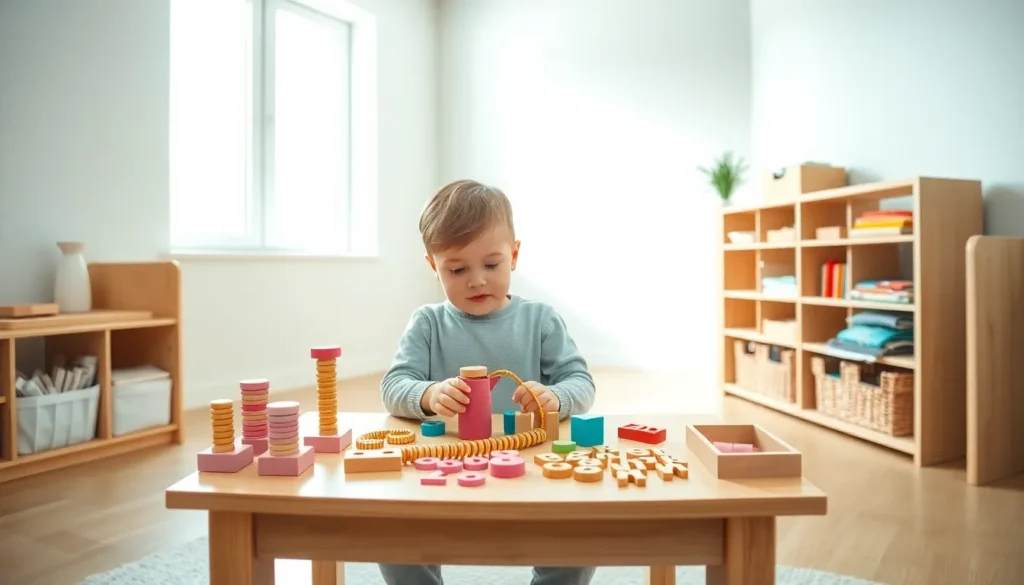
Montessori examples show how children learn best through hands-on, self-directed activities. This educational approach lets kids explore at their own pace while building real-world skills. From pouring water into a glass to sorting buttons by color, Montessori activities turn everyday moments into learning opportunities.
Maria Montessori developed this method over a century ago, and it remains popular today. Parents and educators use Montessori examples in classrooms and homes worldwide. The core idea is simple: children are natural learners who thrive when given the right environment and tools. This article covers practical Montessori examples across five key areas, practical life, sensory learning, language, math, and home implementation.
Table of Contents
ToggleKey Takeaways
- Montessori examples turn everyday tasks like pouring, sorting, and food preparation into powerful learning opportunities for children.
- Practical life activities build fine motor skills, independence, and concentration through hands-on repetition.
- Sensory materials like the Pink Tower, sound cylinders, and fabric matching sharpen children’s perception and prepare them for academic concepts.
- Language development in Montessori follows a multi-sensory sequence, using sandpaper letters and moveable alphabets before traditional writing.
- Math materials like golden beads and number rods make abstract concepts concrete by letting children physically handle quantities.
- Parents can implement Montessori examples at home by creating accessible spaces, using real tools, and following their child’s natural interests.
Everyday Practical Life Activities
Practical life activities form the foundation of Montessori examples. These tasks mirror daily household chores and self-care routines. Children develop fine motor skills, concentration, and independence through repetition.
Pouring and Transferring
Pouring exercises teach hand-eye coordination. A child might pour rice from one pitcher to another or transfer water between containers. Start with dry materials like beans or rice before moving to liquids. This progression builds confidence and reduces mess.
Care of Self
Dressing frames help children practice buttoning, zipping, and tying. Kids also learn to wash their hands properly, brush their teeth, and comb their hair. These Montessori examples give children ownership over their personal care.
Care of Environment
Sweeping, dusting, and watering plants teach responsibility. Children use child-sized brooms and watering cans designed for small hands. Folding cloths and arranging flowers on a table build attention to detail. These activities show kids they contribute meaningfully to their surroundings.
Food Preparation
Slicing bananas, spreading butter on bread, and peeling eggs are common Montessori examples. Children use real tools, not plastic toys, under supervision. They learn kitchen safety while preparing actual snacks they can eat.
Sensory Learning Materials and Exercises
Sensory activities sharpen a child’s perception through sight, sound, touch, taste, and smell. Montessori examples in this category use specially designed materials that isolate specific senses.
The Pink Tower
This classic Montessori material consists of ten pink cubes in graduated sizes. Children stack them from largest to smallest. The activity teaches visual discrimination of dimension and prepares the brain for mathematical concepts like volume.
Sound Cylinders
Two sets of cylinders contain different materials that produce varying sounds when shaken. Children match pairs that sound identical. This exercise refines auditory perception and builds concentration.
Fabric Matching
Baskets containing fabric swatches of different textures invite tactile exploration. Children feel each swatch and find matching pairs. Some do this exercise blindfolded to heighten their sense of touch.
Color Tablets
Sets of colored tablets progress from primary colors to subtle shades. Children arrange them in gradation or match identical hues. These Montessori examples train the eye to distinguish fine color differences.
Mystery Bag
A cloth bag holds small objects of various shapes. Children reach in, feel an object, and identify it without looking. This activity strengthens tactile memory and vocabulary as kids name what they discover.
Language and Literacy Development Examples
Montessori examples for language follow a specific sequence. Children begin with spoken language, move to written symbols, and eventually read fluently.
Sandpaper Letters
Letters cut from sandpaper and mounted on boards let children trace the shape while saying the sound. This multi-sensory approach connects the physical movement of writing with phonetic sounds. Kids use two fingers to trace, building muscle memory for future handwriting.
Moveable Alphabet
A box of wooden or plastic letters allows children to spell words before they can write them. They sound out words and arrange the corresponding letters. This separates the mental task of spelling from the physical challenge of pencil control.
Object Boxes
Small objects grouped by initial sound sit in compartmentalized boxes. A box might contain a pig, pen, and pear for the “p” sound. Children name each object, reinforcing phonemic awareness.
Three-Part Cards
These cards feature a picture with a label, a picture without a label, and a label alone. Children match labels to pictures, then check their work against the control card. This self-correcting feature is central to Montessori examples, kids verify their own answers.
Story Baskets
Baskets containing miniature figures and props let children retell stories or create their own. A basket might hold a farmer, animals, and a barn. This activity builds narrative skills and vocabulary.
Math and Logical Thinking Activities
Montessori math materials make abstract concepts concrete. Children physically handle quantities before working with symbols. This hands-on approach gives numbers real meaning.
Number Rods
Ten rods in alternating red and blue segments represent quantities one through ten. Children arrange them in order and count the segments. The rods show that each number is one unit larger than the previous.
Spindle Boxes
A box with compartments labeled zero through nine holds loose spindles. Children count the correct number of spindles into each section. The empty “zero” compartment teaches that zero means nothing, a concept many young children find tricky.
Golden Beads
This material represents the decimal system through single beads (units), bars of ten beads, squares of one hundred, and cubes of one thousand. Children physically see that ten units make one ten, and ten tens make one hundred. These Montessori examples let kids perform addition, subtraction, multiplication, and division with large numbers.
Bead Chains
Chains of colored beads in sequences like 3-6-9-12 teach skip counting and multiplication. Children place small arrows at intervals, building a visual and tactile understanding of times tables.
Addition and Subtraction Strip Boards
Numbered strips on a board help children work through math facts systematically. They line up strips to find sums or differences, discovering patterns in arithmetic.
Implementing Montessori Methods at Home
Parents don’t need a classroom full of materials to use Montessori examples at home. The method adapts well to any living space with a few adjustments.
Create Accessible Spaces
Place items at child height. Low shelves let kids choose activities independently. A step stool at the kitchen sink invites participation in meal prep. Small hooks for coats and bags encourage self-sufficiency.
Use Real Tools
Skip the plastic play kitchen. Give children real (but safe) knives, glass cups, and ceramic plates. They learn care and responsibility when items can break. Of course, supervision remains essential.
Rotate Activities
Too many choices overwhelm children. Keep three to five activities available on a shelf and rotate them weekly. This maintains interest and encourages deeper engagement with each item.
Follow the Child
Observe what interests your child and build on it. If they love sorting rocks, introduce activities that extend that interest, weighing rocks, categorizing by color, or learning about geology. Montessori examples work best when they match a child’s natural curiosity.
Allow Time for Repetition
Children often repeat activities many times. Resist the urge to introduce something new when a child seems “stuck” on one task. Repetition builds mastery and confidence.