
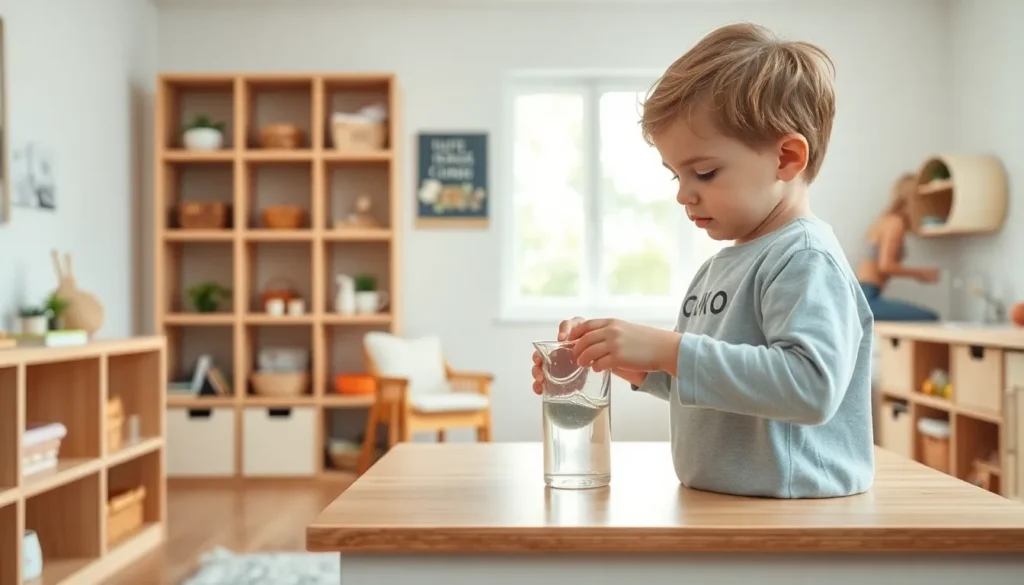
Learning how to Montessori doesn’t require a teaching degree or expensive equipment. The Montessori method offers a child-centered approach to education that parents can carry out at home with some basic knowledge and preparation. This guide breaks down the core principles and gives actionable steps to bring Montessori practices into daily life. Whether someone has a toddler or a school-age child, these strategies work across age groups and living situations.
Table of Contents
ToggleKey Takeaways
- Learning how to Montessori at home requires no teaching degree—just thoughtful adjustments that support your child’s independence.
- Create a prepared environment by placing items at child height, reducing clutter, and rotating 8-10 toys regularly.
- Practical life activities like pouring water, folding clothes, and slicing fruit build coordination and confidence using everyday household items.
- Let children lead their own learning by offering choices, avoiding over-correction, and allowing them to work through frustration.
- Shift your role from instructor to guide—observe more, direct less, and involve children in real tasks rather than doing things for them.
Understanding the Montessori Philosophy
The Montessori philosophy centers on one key idea: children learn best when they direct their own learning. Dr. Maria Montessori developed this approach in the early 1900s after observing how children naturally explore their environments.
Three core principles define how to Montessori effectively:
Respect for the Child
Montessori treats children as capable individuals. Adults serve as guides rather than instructors. This means offering choices, waiting for children to complete tasks themselves, and speaking to them with the same respect given to adults.
Prepared Environment
The physical space matters. A Montessori environment puts everything at child height and organizes materials in a logical way. Children can access what they need without asking for help.
Sensitive Periods
Children go through phases where they absorb specific skills easily. A toddler obsessed with opening and closing doors is in a sensitive period for movement. A four-year-old asking “why” constantly is ready for language expansion. Montessori education follows these natural windows.
The philosophy also emphasizes mixed-age groupings and uninterrupted work periods. Children learn from watching older peers, and younger ones give older children opportunities to teach. Work periods of 2-3 hours allow deep concentration without artificial time limits.
Understanding these principles makes implementation much easier. Every Montessori decision flows from asking: Does this support the child’s independence and natural development?
Creating a Montessori Environment at Home
A Montessori environment at home doesn’t mean buying special furniture or redoing entire rooms. It means making thoughtful adjustments that put children in control of their space.
Start with Accessibility
Look at each room from a child’s perspective. Can they reach their own clothes? Pour their own water? Choose their own books? Simple changes make a big difference:
- Lower coat hooks so children hang their own jackets
- Place a small pitcher of water and cups on a low shelf
- Store toys on open shelves instead of in closed bins
- Add a step stool in the bathroom and kitchen
Reduce Clutter
Montessori spaces feature fewer toys, rotated regularly. Too many choices overwhelm children and reduce focus. Select 8-10 activities and store the rest. Swap them out every few weeks to maintain interest.
Create Defined Areas
Organize the home into zones: a reading corner with a small chair and lamp, a practical life area with child-sized cleaning tools, an art station with accessible supplies. Clear boundaries help children know where activities belong.
Use Real Materials
Montessori favors glass cups over plastic, real tools over toy versions. Children rise to expectations. A breakable cup teaches careful handling better than any lecture. Of course, use judgment, a butter knife works fine for a three-year-old learning to spread.
The goal is creating a space where children can function independently. When they don’t need to ask for help constantly, they build confidence and self-reliance. This approach to how to Montessori transforms the home into a learning environment without making it look like a classroom.
Practical Activities and Materials
Montessori activities divide into several categories. Parents don’t need to purchase official Montessori materials, many activities use household items.
Practical Life Activities
These build coordination, concentration, and independence. Examples include:
- Pouring water between pitchers
- Spooning beans from one bowl to another
- Folding washcloths
- Polishing shoes or mirrors
- Slicing soft fruits with a child-safe knife
- Watering plants
Practical life work forms the foundation of how to Montessori at home. Children love doing “real” work alongside adults.
Sensorial Activities
These refine the senses and build observation skills:
- Matching fabric textures
- Sorting objects by size, color, or shape
- Sound matching games with containers filled with different materials
- Smelling jars with various scents
Language Materials
Montessori introduces reading through phonics and tactile letters:
- Sandpaper letters for tracing
- Moveable alphabet for word building
- Picture-to-word matching cards
- Storytelling with picture sequences
Math Materials
Montessori math uses concrete objects before abstract numbers:
- Counting with physical objects like buttons or stones
- Number rods showing quantity visually
- Bead chains for skip counting
Presentation Matters
How adults introduce activities affects engagement. Sit beside the child, not across. Demonstrate slowly without talking. Let the child try immediately after. Avoid correcting mistakes, the materials often provide built-in error control.
One activity at a time. One skill at a time. This slow, deliberate approach builds mastery.
Encouraging Independence in Daily Life
Independence sits at the heart of Montessori practice. Every routine offers opportunities to build self-reliance.
Morning Routines
Let children choose their clothes from a limited selection. Lay out two outfit options the night before for younger children. Teach teeth brushing step by step, then step back. A visual checklist with pictures helps children track their own progress.
Mealtimes
Involve children in food preparation from early ages. A two-year-old can wash vegetables. A three-year-old can stir ingredients. A four-year-old can measure and pour. During meals, children can serve themselves from small dishes and pour their own drinks.
Cleaning Up
Montessori children clean their own spills, put away their materials, and help with household chores. Keep cleaning supplies accessible, a small dustpan, a spray bottle with water, a basket for dirty clothes. Make cleanup part of the activity, not a separate punishment.
Problem Solving
Resist the urge to fix everything. When a child struggles, wait. Ask “What could you try?” instead of jumping in. Frustration builds resilience when children work through it themselves.
The Role of the Adult
Montessori adults observe more than they direct. They prepare the environment, present activities, and then get out of the way. This requires patience. Watching a child take ten minutes to button a shirt feels agonizing, but that struggle builds competence.
Learning how to Montessori means shifting from doing things for children to doing things with them, and eventually watching them do things alone.