Montessori education has transformed how millions of children learn across the globe. Developed over a century ago by Dr. Maria Montessori, this approach places children at the center of their own learning journey. Rather than following rigid lesson plans, students explore subjects at their own pace using hands-on materials. The method has gained renewed attention as parents and educators seek alternatives to traditional schooling. This guide covers everything parents need to know about Montessori, from its core principles to practical classroom features and the real benefits children experience.
Table of Contents
ToggleKey Takeaways
- Montessori education is a child-centered approach that allows students to explore subjects at their own pace using hands-on materials.
- Mixed-age classrooms and uninterrupted work periods help children develop independence, leadership, and deep focus skills.
- Research shows Montessori students often outperform peers in reading, math, and executive function skills like planning and self-control.
- Look for AMI or AMS accreditation when choosing a Montessori school, as quality varies and the term isn’t trademarked.
- Consider your child’s learning style and temperament—children who thrive with freedom and self-initiated activities tend to excel in Montessori settings.
- Public Montessori options and magnet programs exist in many areas, making this educational approach more accessible than many parents realize.
What Is Montessori Education?
Montessori education is a child-centered teaching method developed by Italian physician Dr. Maria Montessori in the early 1900s. She observed children in Rome and noticed they learned best when given freedom to choose their activities. Her observations led to a structured yet flexible approach that respects each child’s natural development.
At its core, Montessori treats children as capable individuals. Teachers act as guides rather than lecturers. Students select work from a prepared environment filled with specialized learning materials. A typical Montessori classroom groups children of different ages together, usually spanning three years. This setup allows younger students to learn from older peers while older children reinforce their knowledge by helping others.
The Montessori method covers children from infancy through adolescence. Programs exist for infants and toddlers (0–3 years), early childhood (3–6 years), elementary (6–12 years), and even secondary levels (12–18 years). Each stage builds on the previous one, following what Montessori called “sensitive periods”, windows when children show heightened interest in specific skills like language, order, or movement.
Core Principles of the Montessori Method
Several foundational principles define Montessori education. Understanding these helps parents see what makes this approach different from conventional schooling.
Respect for the Child
Montessori classrooms treat children with genuine respect. Adults listen to children, consider their opinions, and allow them to make choices. This respect builds confidence and self-worth from an early age.
The Absorbent Mind
Dr. Montessori believed young children absorb information effortlessly from their surroundings. Between birth and age six, children learn language, culture, and social norms simply by existing in their environment. Montessori classrooms leverage this by creating rich, stimulating spaces.
Sensitive Periods
Children pass through specific phases when they show intense interest in particular skills. A child might become fascinated with tiny objects, language sounds, or organizing items by size. Montessori teachers recognize these periods and provide appropriate materials at the right time.
The Prepared Environment
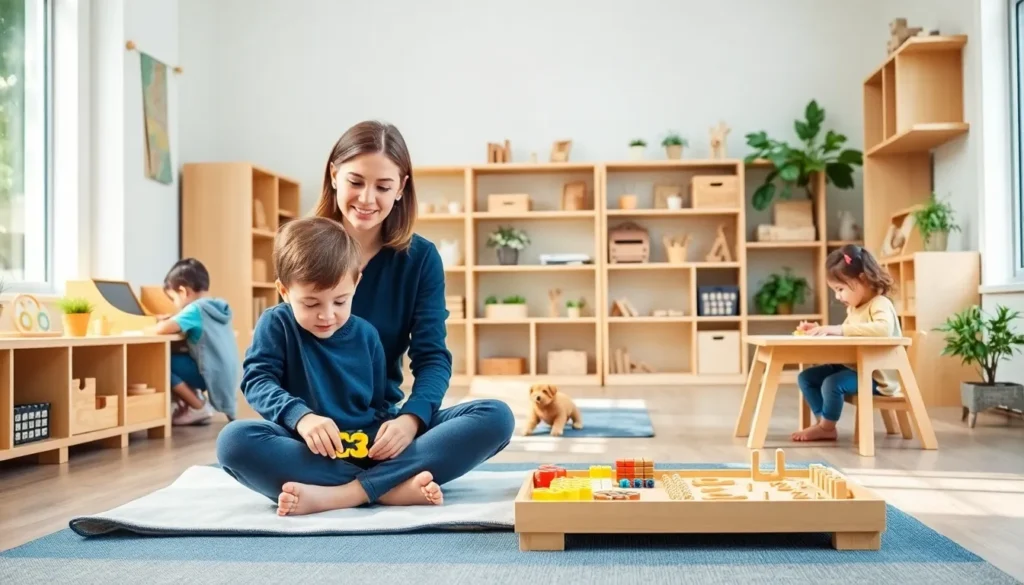
Every item in a Montessori classroom has a purpose. Materials sit on low, accessible shelves. Furniture fits children’s bodies. The space invites exploration and independence. Nothing appears by accident, teachers carefully arrange each element.
Auto-Education
Montessori believed children can teach themselves when given proper tools and freedom. The materials contain built-in error control, so children discover mistakes on their own rather than relying on adult correction. This builds problem-solving skills and internal motivation.
Key Features of a Montessori Classroom
Walking into a Montessori classroom feels different from entering a traditional school. Several distinctive features set these spaces apart.
Mixed-Age Groups: Children typically span a three-year age range. A primary classroom might include three-, four-, and five-year-olds learning together. This mirrors real-world social settings and creates natural mentoring opportunities.
Uninterrupted Work Periods: Students receive long blocks of time, often two to three hours, to work without interruption. This extended focus allows children to enter deep concentration states. They complete activities fully rather than stopping when a bell rings.
Hands-On Materials: Montessori materials engage multiple senses. Children learn math using golden beads they can hold and count. They trace sandpaper letters before writing. Geography lessons involve puzzle maps they can touch and assemble. Abstract concepts become concrete through physical manipulation.
Freedom Within Limits: Students choose their own activities, but clear boundaries exist. Children must treat materials respectfully, return items to shelves, and avoid disturbing others. This balance teaches responsibility alongside independence.
No Traditional Grades: Most Montessori schools skip letter grades and standardized tests for young children. Teachers assess progress through observation and detailed records. Parent conferences focus on the whole child rather than test scores.
The Role of the Teacher: Montessori teachers observe more than they instruct. They give brief, individual lessons and then step back. Their job involves preparing the environment, connecting children with appropriate materials, and fostering independence.
Benefits of Montessori for Children
Research and decades of practice have revealed multiple benefits children gain from Montessori education.
Strong Independence: Children learn to care for themselves early. They pour their own drinks, tie their shoes, and manage their belongings. These practical life skills build confidence that extends beyond the classroom.
Intrinsic Motivation: Without grades or rewards, children develop internal drive. They work because learning feels satisfying, not because they expect gold stars. Studies show Montessori students often maintain this love of learning into adulthood.
Social and Emotional Growth: Mixed-age classrooms create unique social dynamics. Older children develop leadership and empathy by helping younger peers. Younger children gain aspirational role models. Conflict resolution happens naturally as children learn to share space and materials.
Academic Achievement: Multiple studies have found Montessori students perform as well as or better than peers in traditional schools on standardized measures. A 2017 study in Frontiers in Psychology found Montessori preschoolers showed greater gains in reading and math compared to control groups.
Executive Function: The Montessori approach strengthens skills like planning, focus, and self-control. Children practice making choices, managing time during work periods, and following multi-step processes. These executive functions predict long-term academic and life success.
Creativity and Critical Thinking: Open-ended materials and freedom to explore foster creative problem-solving. Children learn there’s often more than one right answer. They experiment, make mistakes, and try again.
Is Montessori Right for Your Child?
Montessori works wonderfully for many children, but it isn’t automatically the best fit for everyone. Parents should consider several factors before enrolling.
Learning Style: Some children thrive with the freedom Montessori offers. Others prefer more structure and direct instruction. Observe your child at home, do they initiate activities independently, or do they prefer step-by-step guidance?
Temperament: Highly social children enjoy the collaborative Montessori environment. Children who need quiet, solitary focus may find the open classroom challenging at first, though many adapt over time.
School Quality Varies: Not all schools calling themselves “Montessori” follow authentic practices. The term isn’t trademarked, so anyone can use it. Look for accreditation from the Association Montessori Internationale (AMI) or the American Montessori Society (AMS). Visit classrooms and observe teachers in action.
Cost and Availability: Private Montessori programs can be expensive. But, public Montessori schools exist in many areas, and some districts offer magnet programs. Research local options before assuming the method is out of reach.
Transition Considerations: Children switching from Montessori to traditional schools sometimes face adjustment periods. The shift from self-directed learning to teacher-led instruction can feel abrupt. Many families plan transitions carefully, often at natural break points like entering middle school.
Schedule observations at local programs. Speak with current parents. Trust your instincts about whether the environment matches your child’s needs and your family’s values.