
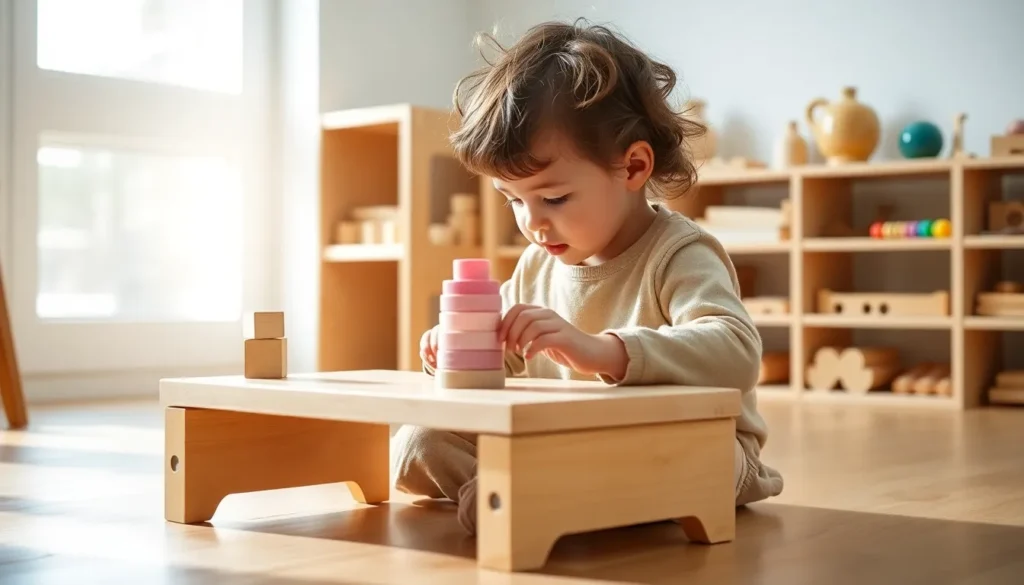
Montessori tools help children learn through hands-on exploration and self-directed activity. These materials form the foundation of Montessori education, a method developed by Dr. Maria Montessori over a century ago. Parents and educators use Montessori tools to foster independence, concentration, and a genuine love of learning in young children.
This guide covers the core categories of Montessori materials, explains how to select the right ones, and highlights the benefits of using these tools at home. Whether someone is new to Montessori or looking to expand their collection, understanding these essentials makes all the difference.
Table of Contents
ToggleKey Takeaways
- Montessori tools are specially designed, self-correcting materials that support hands-on, child-led learning through natural materials like wood and metal.
- Practical Life tools (pouring sets, dressing frames, child-sized cleaning supplies) build independence and fine motor skills in children ages 2-6.
- Sensorial materials like the Pink Tower and color tablets sharpen the five senses and lay the groundwork for abstract thinking in math and science.
- Choose Montessori tools based on your child’s developmental readiness and interests, starting with a few quality basics rather than buying everything at once.
- Using Montessori tools at home deepens concentration, builds problem-solving skills, and reduces screen time through engaging, hands-on activities.
- Create a prepared environment by displaying Montessori tools on low, accessible shelves so children can independently choose their activities.
What Are Montessori Tools?
Montessori tools are specially designed materials that support hands-on, child-led learning. Unlike typical toys, these tools serve a specific educational purpose. Each item isolates one concept or skill, allowing children to focus without distraction.
Dr. Maria Montessori developed these materials through careful observation of children. She noticed that kids learn best when they can touch, manipulate, and explore objects at their own pace. Montessori tools reflect this insight. They’re made from natural materials like wood, metal, and fabric. They feature realistic proportions and simple designs.
A key feature of Montessori tools is their self-correcting nature. For example, a puzzle piece only fits one way. A child can see their own mistake and fix it without adult intervention. This builds confidence and problem-solving skills.
Montessori tools cover a wide range of developmental areas:
- Motor skills – pouring, threading, and gripping activities
- Sensory development – texture, weight, and sound exploration
- Cognitive growth – sorting, sequencing, and early math concepts
- Language skills – letter tracing, vocabulary building, and phonics
These materials work together to create a prepared environment where children thrive. The goal is always the same: let the child lead while providing the right tools for discovery.
Key Categories of Montessori Materials
Montessori tools fall into several distinct categories. Each category targets specific developmental stages and skills. Two of the most fundamental categories are Practical Life tools and Sensorial materials.
Practical Life Tools
Practical Life tools help children master everyday tasks. These activities build independence, coordination, and concentration. They also give children a sense of purpose and contribution.
Common Practical Life Montessori tools include:
- Pouring sets – pitchers and cups for transferring water or dry goods
- Dressing frames – boards with buttons, zippers, snaps, and laces
- Child-sized cleaning supplies – brooms, dustpans, and mops
- Food preparation kits – safe knives, cutting boards, and peelers
- Care of self materials – hand-washing stations, grooming items
These tools mirror real-world objects. A child uses an actual glass pitcher, not a plastic toy. This approach teaches respect for materials and builds fine motor control.
Practical Life activities typically suit children ages 2 to 6. They form the entry point into Montessori education. A child who masters buttoning their coat gains confidence that carries into more complex learning.
Sensorial Materials
Sensorial Montessori tools sharpen the five senses. They help children classify and understand the world around them. Dr. Montessori believed sensory education lays the groundwork for abstract thinking.
Popular Sensorial materials include:
- Pink Tower – ten pink cubes of graduated sizes
- Brown Stair – ten prisms that vary in width
- Color tablets – matching and grading colors by shade
- Sound cylinders – paired containers that produce matching sounds
- Geometric solids – spheres, cones, cubes, and pyramids for touch exploration
Each Sensorial tool isolates one quality. The Pink Tower focuses only on size. Color tablets focus only on hue. This isolation helps children notice subtle differences they might otherwise miss.
Sensorial Montessori tools also prepare children for math and science. Grading objects by size introduces concepts like greater than and less than. Matching sounds develops auditory discrimination, which supports later reading skills.
How to Choose the Right Montessori Tools
Selecting Montessori tools requires attention to a child’s age, interests, and current abilities. The right materials challenge without frustrating.
Consider developmental readiness. A 2-year-old benefits from simple pouring activities. A 4-year-old might be ready for letter tracing sandpaper cards. Observe what a child gravitates toward naturally.
Start with basics. Many parents want to buy everything at once. This approach often backfires. Begin with a few quality Montessori tools in Practical Life and Sensorial categories. Add more as the child masters initial materials.
Prioritize quality over quantity. Authentic Montessori tools are made from natural materials. Wood, glass, metal, and cotton feel different from plastic. These textures matter for sensory development. Cheap imitations often lack the precision that makes Montessori tools effective.
Match the child’s interests. A child fascinated by cooking will engage deeply with food preparation Montessori tools. A child drawn to patterns might love geometric materials. Following interests keeps motivation high.
Create a prepared environment. Montessori tools work best when displayed on low, accessible shelves. Children should be able to choose their activities independently. Rotate materials every few weeks to maintain interest.
Here’s a quick selection guide:
| Age Range | Recommended Montessori Tools |
|---|---|
| 1-2 years | Object permanence box, simple puzzles, stacking rings |
| 2-3 years | Pouring sets, dressing frames, shape sorters |
| 3-4 years | Pink Tower, color tablets, sandpaper letters |
| 4-6 years | Bead chains, movable alphabet, geometric solids |
Budget-conscious families can also create DIY Montessori tools. A set of measuring cups, a whisk, and real ingredients make an excellent pouring and mixing station.
Benefits of Using Montessori Tools at Home
Bringing Montessori tools into the home extends learning beyond the classroom. Parents don’t need a formal Montessori school to apply these principles.
Independence grows quickly. Children who use Montessori tools learn to care for themselves and their environment. A 3-year-old who practices with dressing frames can button their own shirt. A 4-year-old who uses child-sized cleaning supplies takes pride in tidying up.
Concentration deepens. Montessori tools are designed for repeated use. A child might work with the Pink Tower for 30 minutes, building and rebuilding. This sustained focus transfers to other activities, including schoolwork later on.
Problem-solving becomes natural. Because Montessori tools are self-correcting, children learn to identify and fix their own errors. They don’t wait for an adult to tell them what’s wrong. This builds resilience and critical thinking.
Sensory awareness expands. Sensorial Montessori tools train children to notice details. They learn to distinguish between shades of blue or weights of cylinders. This heightened awareness helps with everything from reading (letter recognition) to math (quantity comparison).
Parent-child connection strengthens. Using Montessori tools together creates opportunities for calm, focused interaction. Parents observe rather than direct. Children feel trusted and capable.
Screen time decreases. Engaging, hands-on Montessori tools compete well against digital distractions. Children naturally choose activities that challenge them appropriately.
The home doesn’t need to look like a Montessori classroom. Even a small corner with a few well-chosen Montessori tools makes a difference. Consistency matters more than perfection.